I’m not sure why this particular series of Escapades hasn’t made it to the Conversations page, seeing as over the past 10 weeks Julie and Jess have accomplished manatee wrangling, flower planting, rack installing, post setting, cement mixing, beach walking, and fire building. Regardless of the cause, here’s a snippet from the past weekend.
Most Fridays after work, I drive 3 hours north to Orlando; this weekend, the roads switched. After church in Port Charlotte on Sabbath, Julie and I nabbed some delicious corned beef and cabbage from Cocina Goffin, then caught rays and shark teeth on a Gulf-side beach before we watched for the “green flash” at sunset.
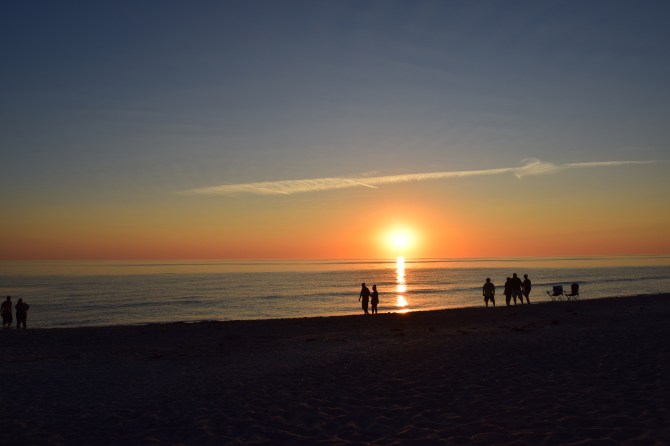
We fought the urge to hit snooze on Sunday morning when the alarms sounded at 4:57 am (yep, precisely that; because 4:55 just felt too early) for our hit-the-road time of 5:30 to catch the sun when it peeked over the opposite horizon. Since we are staying on the Gulf-side (west coast) of Florida, we traveled until we found an “east coast” on Sanibel Island. We watched the sky grow lighter through a foggy cast, and streaks of sunlight bouncing off the bay betwixt our island perch and the southwesterly corner of Fort Myers.


Then we got snacks from the car, ‘cuz snacks are an important part of any escapade.
Back to the beach we went, re-energized and ready to hunt shells. We picked our way through the white sands and tide pools, ooh-ing and ah-ing over various colors and shapes. Then, we each found large, beautiful, lightning whelks! We deftly dropped them into the mesh pocket of the backpack to dry and to leave any clinging sand on the beach.
(Note: Here’s where I had to stop writing on Sunday night because I was shuddering from the flashbacks and a genuinely worried about nightmares)
We’d noticed the firm, dark brown films (opercula) over the openings of the shells, and assumed this signified the shell creators were still inside (I ignorantly believed they were dead if they’d washed ashore – more on that later). Google offered some suggestions for removing the creatures, listed as follows:
- Bury the shell underground for 5 months to let creepy-crawlies remove “the tissue”.
- Boil the shell and use tongs to remove “the tissue”.
- Microwave the shell and let cool before removing “the tissue”.
- Bleach the shell and scrub it gently prior to removing “the tissue”.
My stomach turned at each mention of “tissue”, and I told Julie I’d be leaving my shell at the beach. She opted to do the same, and since she was carrying the backpack, it was my job to remove the shells from the mesh side pocket.
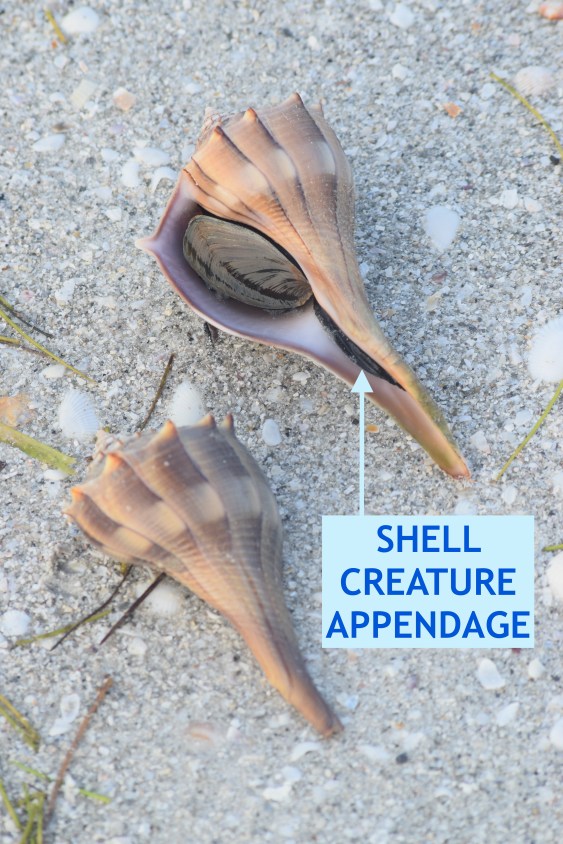
Open mesh pockets on the outside of backpacks are designed for easy access, without easily losing their contents – especially shells that are wide and knobby on one end, and slender and pointy on the other. And especially when the pocket-emptier has a deep-seated fear of the creatures that she now realizes are LIVING inside those shells.
Disclaimer: I grew up in the Midwest. We don’t have oceans there. We have the Great Lakes, which are like happy little oceans that don’t have salt and don’t grow creatures that are out to kill you.
I used my 2-finger pincer tactic to remove the shell that still had its opening facing toward the mesh, so I could keep my eyes on the potential attacker (another side note: whelks are CARNIVORES. And I am made of MEAT). I didn’t keep my hand in contact with the shell for more than 0.8 seconds at one time, bopping the petrifying gastropod this way and that until I could pull it out by the end farthest from the trap door, dangling it briefly before plopping it onto the sand. The second shell had maneuvered itself into a position in which the shell opening was facing the backpack, so the mollusk had the upper foot (they don’t have hands) in surprise attack. I skillfully – using clubbing motions, hopping from foot to foot, and squawking – succeeded in removing the second whelk from its place near Julie’s elbow to a defeated position back in the sand.
*shudder*
Guys. I survived.
But barely.
Just call me Chicken of the Sea.
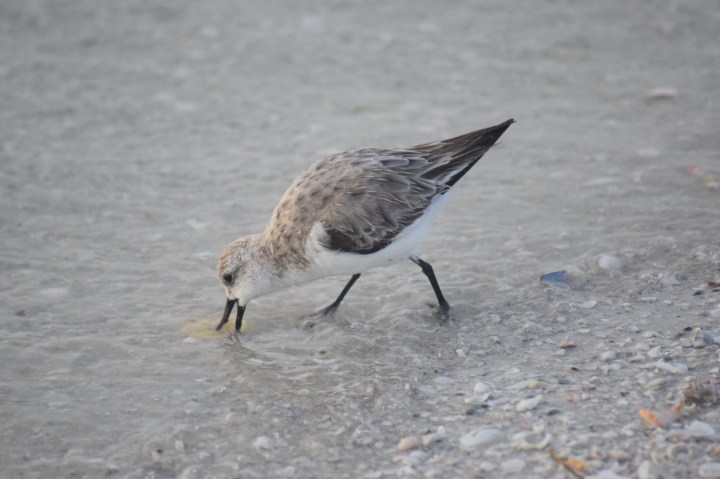
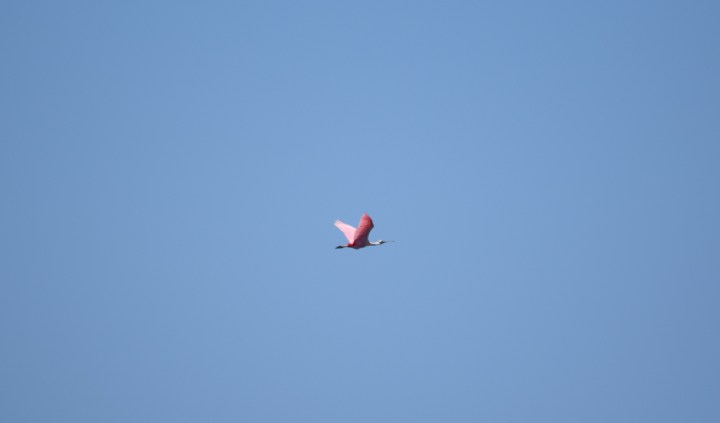
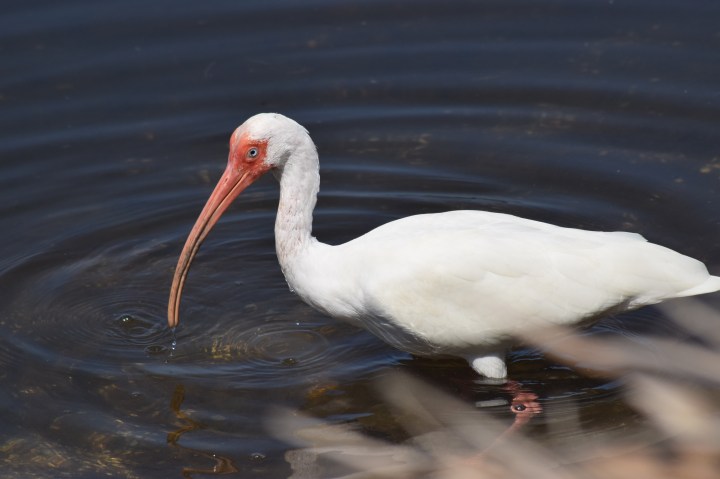
(In case you, too, suffered through the retelling of this story, please view the following photos to push images of murderous mollusks from your recent memory files):
 Conversations on El Camino