SO MUCH has transpired in the last five days of September. But first, some introductions.
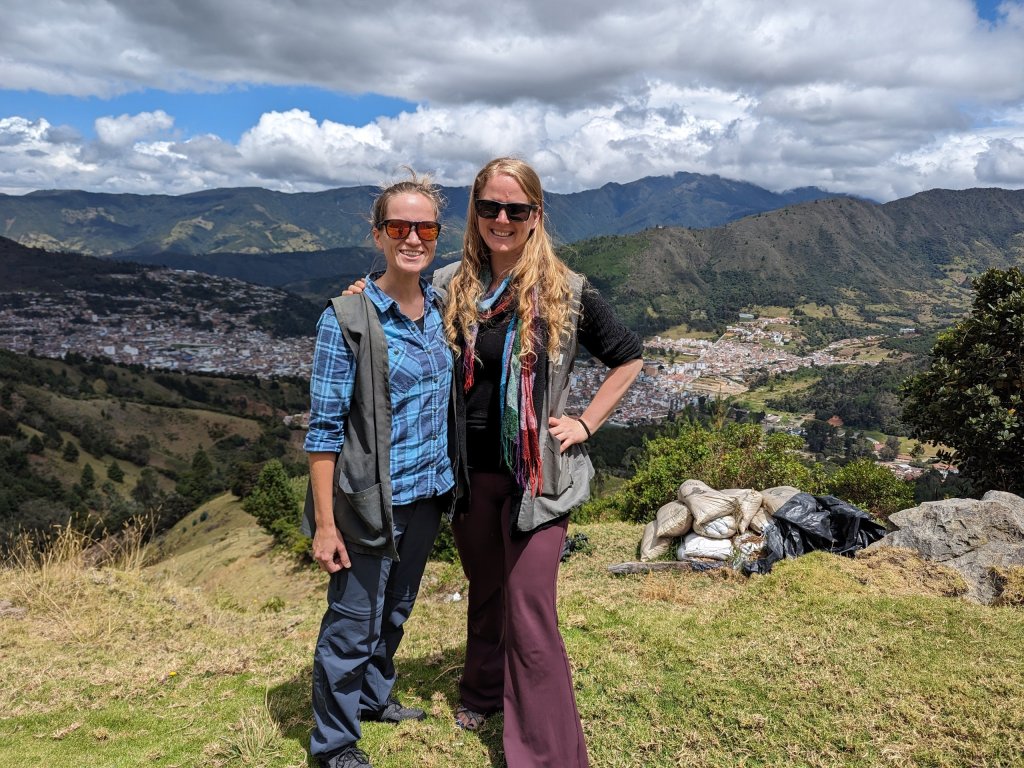
My friend Bethani and I met at summer camp fifteen years ago, where we bonded over hauling tipi poles down a wooded hillside without losing limbs or gaining concussions. Since that time, Bethani has consistently encouraged me to quit my job and follow her on adventures – so I found myself in Pamplona, Colombia, adjusting gradually to 8,000 feet elevation and understanding at best 50% of the conversations.
Five years ago, Bethani learned of the ongoing economic crisis in Venezuela fueling a huge exodus of caminantes – refugees on foot – into Colombia and other surrounding countries since 2015. She traveled to the Colombia-Venezuela border to ascertain what aid was available, and what gaps might have opportunities to be filled. This sparked her foundation of On the Ground International (OTGI), a humanitarian aid NGO that has grown to include 5 full-time employees and multiple international volunteers, all working to support the needs of the caminantes who walk through northeastern Colombia in their hunt for a living wage.
When I was selected as a member of a medical mission team to Peru for October, Bethani – the perpetual adventure planner – suggested I fly through Colombia on my way to Cusco. So I signed up for five days of a crash course in OTGI’s many projects and sponsorships. Buckle up!
Tuesday
I stumbled through the Camilo Daza International Airport’s Puerta 7 and immediately regretted my flannel shirt, a steamy 80⁰ enveloping me as I stepped out into the 7:30a Cúcuta sunshine. I’d slept heavily on my 5:30a flight from Bogota, and my attempts to coax my brain into the high gear required to search out any vocabulario español were largely fruitless. Pedro, a driver for OTGI, pulled up to the curb and waved me over. He tried valiantly to converse with me in my broken Spanish, and had even worse luck attempting to get me to dance to the music on the radio. After my first delightful taste of guanábana (soursop) per Pedro’s insistence, we exited Cucuta and began a winding journey into the Andes Mountains and toward Pamplona.
It wasn’t long before Pedro was braking quickly and pulling over to the side of the narrow mountain road after spotting a group of caminantes. He opened the car trunk, revealing an impressive lunch buffet: trays of boiled eggs, a box of bananas, bags of ham and cheese sandwiches, 5 liter jugs of Gatorade and water, and buckets of Oreos. He served each caminante in turn, entertaining the youngest – about five years old – with jokes and some sleight of hand with the eggs. This happened 6 or 7 times on our drive toward Pamplona, all part of OTGI’s “Mobile Aid” campaign.

I attempted to be helpful, limited by my poor Spanish and fear of being in the way, handing out a few eggs and bananas and as many smiles as I could muster, met with varied reactions of joy, sorrow, quiet nods, and even an exuberant “¡¡Que rico!!” at the sight of the Oreos. Most groups of caminantes were family units, and on two occasions Pedro loaded up mother and children and luggage – drawstring bags, blanket rolls, backpacks, and plastic sacks – and gave them a ride to the next aid station where they could receive food and shelter while waiting for their husbands and brothers to make the trek without the weight of their luggage.
Cúcuta lies on the border of Venezuela and Colombia, so caminantes are commonly seen on this roadway heading west into Colombia. Most caminantes at this point have already walked many miles just to reach the border – their broken sandals, ripped backpacks, and haunted gazes denoting the difficulty of the path behind them – spurred forward by the hope of finding relief from horrific inflation: US$1 bought 9 Venezuelan Bolivar in 2012, but an astronomical 300 trillion Bolivar a decade later; a lawyer’s monthly salary could afford just one carton of eggs.
The ugly, gaping maw of the poverty gap made my stomach turn. Elizabeth, a ten-year-old caminante, looked at me with sparkling eyes as she asked about life in the United States, quizzing me about the fears and unfathomable speed and cost of flying in an airplane, amazed that I had been in the US just the day before. I wanted to empty the whole tray of eggs into her bags and to empty my wallet into her pockets, but I knew there were many more caminantes ahead.
All of this transpired in just 3 hours, Pedro and I arriving at the OTGI volunteer house in Pamplona around 10:30 am. I squeezed through the narrow metal door with my backpack, making my way up the red tile stairs to find a common room with several volunteers and Bethani chatting inside. Bethani whisked me off to drop luggage in a hotel room on the central plaza, followed by a breathless walk up the hill to a friend’s restaurant for lunch.
Afterward, I joined Rea, a volunteer from the UK, for the clean-up project in the Douglas shelter at the entrance of town. We climbed earthen steps carved out of the hillside, dodging an army of dogs and passing a handful of small pole sheds cobbled together out of scrap lumber and corrugated tin, pallets lining the floor. We followed the direction of Douglas, picking up trash, laying out mattresses on the floor of the shelters, repairing broken erosion barriers, but mostly listening to Douglas regale us with stories of his experiences managing a shelter for caminantes.

I was exhausted by the time our evening came to an end. If all of this occurred in one day, I couldn’t imagine what days 2-5 might hold!
 Conversations on El Camino